

Ambassador of Azerbaijan to China: Further cooperation to promote the development of Global South
 0 Comment(s)
 Print
Print E-mail China.org.cn, July 22, 2026
Editor’s note: Azerbaijan is an important member of the Global South and an active participant in the Belt and Road Initiative. Recently, Ambassador of Azerbaijan to China Bunyad Huseynov noted in a written interview that Azerbaijan and China have different historical backgrounds and development models, but they share common aspirations for modernization, the preservation of national sovereignty, cultural identity, and social stability. This provides a strong foundation for mutual learning. Both countries have broad prospects for cooperation in modernization, poverty reduction, connectivity, and green development, and are willing to further deepen cooperation in various fields to promote the development and prosperity of Global South countries.
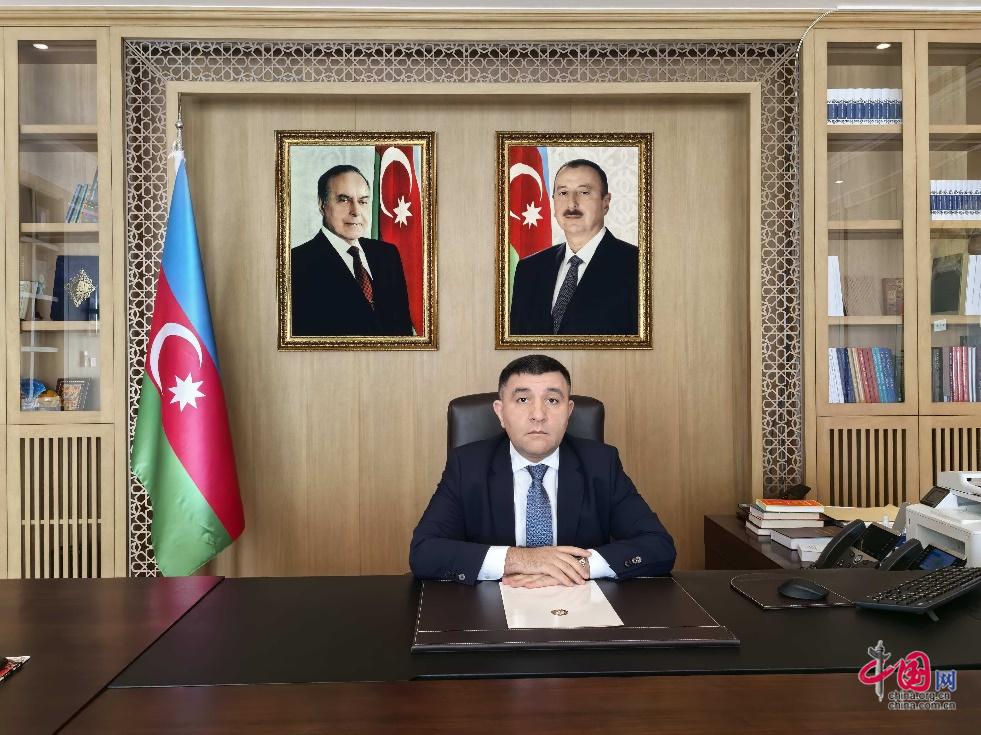
Bunyad Huseynov, Ambassador of Azerbaijan to China
China.org.cn: Azerbaijan is an important member of the Global South. In your view, how could China and Azerbaijan learn from each other and work hand in hand in exploring modernization paths suited to their own national conditions?
Bunyad Huseynov: Azerbaijan and China have different histories, economic structures, and development models. Yet both countries share a common aspiration like modernization, the preservation of national sovereignty, cultural identity, and social stability. This shared aspiration provides a strong foundation for mutual learning. China's modernization experience underscores the importance of long-term strategic planning, development, technological innovation, and poverty reduction. Azerbaijan can draw valuable lessons from China's success. At the same time, Azerbaijan has valuable experience in balancing East-West connectivity, developing a modern energy sector, and maintaining a multicultural society. This can offer useful insights for China, particularly in the context of regional cooperation and intercultural dialogue.
The two countries can strengthen cooperation through policy exchanges, academic research, digital economy partnerships, and joint development projects. By respecting each other's national conditions and development priorities, Azerbaijan and China can contribute to a more diverse and inclusive understanding of modernization. No single model is applicable to all countries.
Our countries provide resolute support to one another on the development path chosen in line with their national specificities, and are ready to continue cooperation to achieve common development and prosperity. Exchanges and cooperation between the political and public institutions of Azerbaijan and China contribute to the further development and comprehensive deepening of bilateral relations.
We also highly appreciate the sustainable and dynamic growth of bilateral trade and economic relations. To achieve high-quality development of Azerbaijan-China trade and economic cooperation, we are ready to further strengthen interaction in the fields of trade, investment and engineering, transport and communications, green energy, recycling and production, infrastructure, digital economy, agriculture and other areas. Azerbaijan and China enjoy strong economic complementarity and immense potential to deepen cooperation in industrialization and investment.
China.org.cn: Poverty reduction is a common challenge for Global South countries. This year marks the fifth anniversary of China’s complete victory in eradicating absolute poverty. From your perspective, which of China’s poverty alleviation practices could provide valuable experience and insights for Azerbaijan? What suggestions would you offer concerning China’s ongoing efforts to comprehensively advance rural vitalization?
Bunyad Huseynov: I worked in Beijing from 2006 to 2009 as a diplomat. During my tenure as ambassador, I have witnessed China’s transformation into a prosperous society. People’s quality of life and the environment have improved continuously thanks to modern technologies and economic projects.
The application of modern technologies is critical in ensuring sustainable development in today's world. China, in particular, holds a significant position in this regard. China has made great strides in improving people's well-being. It is also one of the world’s leading investors in green development and renewable energy. I would like to point out that China sets an example for the world by sharing its expertise and technologies with other nations.
China's achievement in eliminating extreme poverty represents one of the most significant development successes in modern human history. Azerbaijan is sincerely happy with China's successes in the country's development and prosperity. Azerbaijan is also developing at an accelerated pace, and economic diversification remains an evolving goal. In this context, we welcome an increase of China's investment in our economy. We believe that there are promising opportunities in this direction.
China's targeted poverty alleviation approach ensured that assistance was tailored to the specific needs of communities and households. In addition, China's emphasis on infrastructure development - including roads, digital connectivity, healthcare, and education - created conditions for sustainable economic growth. China successfully integrated poverty reduction with industrial development, vocational training, and the promotion of entrepreneurship. Such examples can accelerate development process in other Global South countries, including Azerbaijan.
Regarding China's ongoing rural vitalization strategy, continued investment in agricultural modernization, smart farming technologies, rural digitalization, ecological protection, and youth engagement will be essential. There is great interest in a comprehensive exchange of experience in this area. Strengthening international cooperation can also facilitate knowledge sharing and contribute to sustainable rural development across the Global South.
China.org.cn: Under the framework of the Belt and Road Initiative, how do you think China and Azerbaijan can further deepen cooperation to promote the common development of both countries as well as other Global South countries?
Bunyad Huseynov: Azerbaijan attaches great importance to the Belt and Road Initiative, which builds bridges among countries and nations. My country was among the first to support this global initiative. The main goal of this initiative is breathing new life into the historic Silk Road and expanding areas of cooperation among countries along the route.
Over the years, the Azerbaijani government has invested considerably in building strategic transport infrastructure. I can say that Azerbaijan is the second country after China to have invested the most in implementing this global initiative, both domestically and abroad.
Indeed, our country has become an important international hub for the transportation of goods both from East to West and from North to South. Azerbaijan is a member of the East-West and North-South transport corridors. Modern airports, trunk roads, the new Baku-Tbilisi-Kars railway line, and the Baku International Trade Port in Alat for transshipping 25 million tons of cargo per year demonstrate the full readiness of Azerbaijan's internal transport infrastructure. On the other hand, the favorable tariff policy for transit transportation enhances its attractiveness compared with other countries.
The transport routes passing through Azerbaijan, along with its modern infrastructure, are one of the shortest and most efficient transit routes for cargo transportation from China to Europe and back. Interest in the Middle Corridor from transit operators and logistics companies in China is growing. In 2025, 392 block trains were sent from China to Azerbaijan via the Middle Corridor. As a result of the measures taken, transit time along the Middle Corridor has been reduced to 12 days.
Accelerating the development of the new Eurasian Land-Sea Transport Corridor and the Trans-Caspian International Transport Route, as well as deepening mutual coordination are of particular importance for the stability of international supply chains. Through close coordination between these two corridors, it is possible to enhance connectivity between Southeast Asia and Europe.
The BRI also highlights the potential for increased cultural exchange and mutual understanding between nations. The initiative serves as a platform for fostering friendship and interaction among diverse societies. We believe that preserving and respecting the cultural heritage of countries along the historical Silk Road is key to the success of this endeavor.
China.org.cn: Energy transition presents both challenges and opportunities for many Global South countries. Where do you see the greatest potential for cooperation between China and Azerbaijan in areas such as green energy development and addressing climate change? How could such cooperation serve as a model for other developing countries?
Bunyad Huseynov: The transition toward a greener and more sustainable energy future offers significant opportunities for cooperation between China and Azerbaijan. Azerbaijan possesses substantial renewable energy potential, particularly in solar and wind energy, including offshore wind resources in the Caspian Sea. China, as a global leader in renewable energy technologies, manufacturing, and green infrastructure, can play an important role in supporting Azerbaijan's clean energy transformation.
Azerbaijan has made green growth one of its critical development priorities. In recent years, we have prioritized green projects across the country. Hosting the COP29 conference has inspired us to accelerate our energy transition and strengthen our climate resilience. By 2030, the share of renewables in Azerbaijan’s installed electricity generation capacity will reach 30 percent.
Azerbaijan sees China not only as a friendly country, but also as a source of knowledge, experience and technological progress. Chinese products are also used in Azerbaijan’s digital transformation. Interaction with Chinese partners contributes to our country's technological development. Azerbaijan regards China as one of its main partners in the green transition and in the fields of alternative and renewable energy.
The energy sector is an important component of bilateral cooperation between our countries. Azerbaijan is interested in China's best practices and technologies in the field of alternative energy. I would also like to note that, Chinese companies have already been involved as sub-contractors in wind and solar energy projects implemented in Azerbaijan. We can already see the real effects of Chinese technologies used in the commissioned stations. At the same time, ways are being explored to cooperate in integrating energy from alternative sources and green power transmission into the grid. All these areas can create excellent opportunities for both bilaterally and regional cooperation in green energy and sustainable development.
Chinese technologies are widely used in the projects implemented in our country, and it is important to note the professionalism of Chinese companies in EPC (Engineering, Supply, Construction - a complex turnkey contract in construction) projects.
Such cooperation demonstrates how an energy-exporting country and a major industrial economy can work together to balance energy security, economic growth, and environmental sustainability. This experience could provide valuable lessons for other Global South countries seeking practical and affordable pathways toward green development while maintaining economic competitiveness.
China.org.cn: People-to-people exchanges form an important foundation for strengthening friendship among Global South countries. How do you think China and Azerbaijan can further expand cooperation in culture, education, tourism, and other fields to enhance mutual understanding between the peoples of the two countries and build stronger public support for cooperation among Global South countries?
Bunyad Huseynov: People-to-people exchanges are among the most effective ways to strengthen mutual trust and long-term cooperation between countries. As Azerbaijan and China continue to develop their strategic partnership, expanding cultural and educational exchanges remains a priority.
Two thousand five hundred years ago, trade and cultural ties existed between our peoples via the ancient Silk Road. Our historical bonds were reflected in the works of the great 12th-century Azerbaijani thinker Nizami Ganjavi. In his poem "Seven Beauties," Ganjavi expressed his respect and reverence for the Chinese people by depicting the image of the "Chinese Beauty." Rooted in the depths of history, these ties have evolved over time into mutually beneficial cooperative relations.
Further deepening of the humanitarian cooperation between Azerbaijan and China promotes the continued growth of bonds between our peoples. In this regard, I would like to emphasize the activities of the Heydar Aliyev Foundation aimed at expanding our humanitarian cooperation. Various projects are being successfully implemented by the Heydar Aliyev Foundation together with Chinese partners.
Thanks to our shared values, our people can learn about the depth and beauty of each other's cultures and art. Numerous events dedicated to mutual cultural exchange and enrichment serve as a foundation for bringing our peoples closer. The growing interest in learning each other's languages in both countries is encouraging. Leading higher education institutions of our countries have developed close cooperative ties, scientific exchanges are underway, and a number of joint projects are being implemented. Chinese students study the Azerbaijani language at Beijing Foreign Studies University, and Confucius Institutes successfully continue their activities at higher educational institutions in Azerbaijan. Azerbaijan and China cooperate on educational programs, including scholarship programs and student exchange programs. Within the intergovernmental scholarship program, hundreds of Azerbaijani students are educated at universities in China, and Chinese students study at universities in Azerbaijan at public expense.
Meanwhile, a joint Azerbaijan-China University is expected to be established in the future, which could become a center of Chinese culture and help promote the study of the Chinese language and culture in Azerbaijan. Graduates of this institution may teach Chinese in local secondary schools.
Azerbaijan is interested in further development of cooperation with China in the field of tourism. Citizens of Azerbaijan and China have been able to travel to each other’s countries without visa requirement since July 2025. In December 2025, a representative office of the State Tourism Agency of the Republic of Azerbaijan was established in Beijing. The number of tourists travelling from China to Azerbaijan saw a year-on-year increase of 40% in 2025. Tourism not only generates economic benefits but also strengthens interpersonal connections and cultural appreciation.
More broadly, I believe that enhanced cooperation among think tanks, civil society organizations, media institutions, and youth organizations can help build stronger public support for collaboration among China, Azerbaijan, and other Global South countries. Such exchanges foster mutual respect, understanding, and solidarity, which are essential foundations for sustainable international cooperation in the 21st century.
Reviewers: Wang Zhenhong, Xu Lin and Wang Qian; Planner: Wang Donghai; Editor: Liu Mengya
